


Bowling alleys spare no expense going high-tech, offering upscale dining by Melissa Fletcher Stoeltje
08/28/07
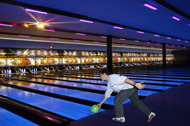 Inside the cavernous, neon-glowing Main Event Entertainment (Austin, Texas), bowling balls crash rhythmically into pins along 28 regulation lanes. But bowling is only part of the story at this 78,000-square-foot recreation behemoth, opened last May and part of a nationwide chain.
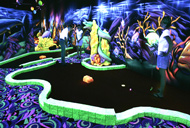
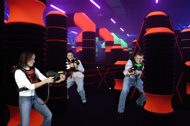
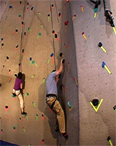 If you tire of going for strikes and spares, try your hand at the rock-climbing wall. Or take your chances on "glow" bowling (illuminated with black lights), or play laser tag, or shoot billiards, or try your luck at more than 100 video games. In between, quench your thirst at one of two chic bars or sate your hunger with veggie quesadillas or spicy grilled chicken in the cafe.
 Clearly, this is not your father's bowling alley. Main Event Entertainment is part of a nationwide trend in which the once dowdy sport of bowling is being given a major revamp. Such "family entertainment centers" are bringing bowling into the new millennium, and folks are eating it up.
 "This is the future of bowling," asserts Main Event general manager Walt Powell. "There's been a stigma over the last decade with bowling being all about the smoking, fat, alcoholic league bowler. That's not where the money is anymore. Now it's all about family-centered fun."
Bowling is going through a metamorphosis, with changes in the sport serving as a sort of microcosm of changes in larger society. Tectonic upheavals have occurred in American culture in the past several decades, and bowling is rolling with the times, surviving into the 21st century intact albeit in slightly different form.
The people who bowl are changing, and bowling centers - the preferred descriptive nowadays, not bowling alley - are catering to the new demographic in a host of ways.
Today the "open play" bowler - someone who bowls on their own, not part of a league - rules.
"The days when you opened your doors and the leagues flowed in and stayed are over," says Mike Anderson, a spokesman for AMF Bowling. "Today you're not only competing with the center across the street but the new restaurant across town."
In its extreme new form, a handful of "bowling lounges" have opened around the country, offering what's called boutique bowling, where martinis are more common than plastic pitchers of Budweiser. These upscale emporiums provide traditional bowling alongside plasma TVs, luxurious bars and executive chefs who serve up mahi-mahi and sirloin-wrapped asparagus.
Targeting a young, hip crowd that thinks nothing of dropping a hundred bucks on a night of bowling, lounges represent the cutting edge of the sport, say industry watchers.
"My challenge is to get people to understand that we're not what we were 25 years ago," says Dotty San Martin, general manager at University Bowl who with her business suit, neat blond bob and perfect manicure is the face of bowling today. "We're not the dark, dank, smoke-filled, beer-drenched bowling alleys of yesterday. We're clean, we're wholesome and we're high-tech."
To trace the changes in bowling is to chart revolutions in America at large.
Bowling in its earliest forms can be traced back to the ancient Egyptians, but ten-pin bowling took root in America in the late 1800s. It spread from New York to all parts of the country, and in the early times was largely an all-male, smoke-filled pastime.
Then the automatic pin-setter was invented in the 1940s. Because of that innovation, the building of bowling centers exploded in the 1950s. In post-World War II America, a surge in civic-mindedness prompted people to join all sorts of community organizations, and that included bowling leagues.
"They became a very dominant part of the culture," says John Berglund, executive director of the Bowling Proprietors Association of America.
But it was not to last. The trend in leagues peaked in 1980, says Mark Miller, spokesman for the United States Bowling Congress.
At that time, some 9 million people belonged to leagues. Compare the number hovers around 2.7 million.
There are a host of reasons for the downturn in league play, not least of which was that perception that many centers became dirty and deteriorated in the '80s and '90s. But the bigger trend was a withdrawal from civic life.
"People simply aren't as community-minded as they were in the '50s and '60s," says Sandy Hansell, a bowling industry promoter in Michigan. "They don't join the Kiwanis Club, the Lions Club or the PTA anymore and they don't join bowling leagues."
Harvard professor Robert Putnam mined this theme in his seminal book "Bowling Alone," which traced the denouement of civic involvement in modern American culture.
Other cultural sea changes played a role as well. The flocking of women into the workplace took a serious toll on daytime women's leagues, a mainstay of league play. In earlier times, people joined leagues through their companies, says Hansell; nowadays people don't work for corporations for decades, like they used to.
But the biggest factor is time. In league play, an individual commits to playing once a week for a 30 week-plus schedule, paying weekly dues that vary from about $10 to $20.
"The older generation thought nothing of committing to a 36-week play schedule," says Miller. "That's like saying you're going to be in the same place every Monday night at 6:30 from Labor Day to Easter. That's a huge commitment and it's not what Americans do today."
At the same time there has been an explosion in home entertainment options, he says - the Internet, DVDs, Blockbuster, cable TV. Concurrently membership in gyms and health clubs has mushroomed, along with a focus on cardiovascular fitness - a benefit bowling is generally not seen as conferring.
On top of all this has been the closing of facilities, as the land underneath many bowling centers eventually proved more valuable than the center itself. In 1962 there were more than 11,000 bowling centers. Today, there are only around 5,500.
"When centers shut down in neighborhoods, people didn't leave their neighborhoods to bowl," says Miller.
But paradoxically bowling is now enjoying a major resurgence, even with these trends. According to a national survey, around 66 million American bowl at least once a year - that's the highest number in the 22 years the survey has been done. Bowling ranks over golf, tennis, even working out.
These open play bowlers are the new lifeblood of bowling centers, particularly when it comes to special activities - birthday parties, corporate team building functions, fundraisers.
Industry News
Republished courtesy of San Antonio Express-News (August 23, 2007)
Inside the cavernous, neon-glowing Main Event Entertainment (Austin, Texas), bowling balls crash rhythmically into pins along 28 regulation lanes. But bowling is only part of the story at this 78,000-square-foot recreation behemoth, opened last May and part of a nationwide chain. If you tire of going for strikes and spares, try your hand at the rock-climbing wall. Or take your chances on "glow" bowling (illuminated with black lights), or play laser tag, or shoot billiards, or try your luck at more than 100 video games. In between, quench your thirst at one of two chic bars or sate your hunger with veggie quesadillas or spicy grilled chicken in the cafe. Clearly, this is not your father's bowling alley. Main Event Entertainment is part of a nationwide trend in which the once dowdy sport of bowling is being given a major revamp. Such "family entertainment centers" are bringing bowling into the new millennium, and folks are eating it up. "This is the future of bowling," asserts Main Event general manager Walt Powell. "There's been a stigma over the last decade with bowling being all about the smoking, fat, alcoholic league bowler. That's not where the money is anymore. Now it's all about family-centered fun."Bowling is going through a metamorphosis, with changes in the sport serving as a sort of microcosm of changes in larger society. Tectonic upheavals have occurred in American culture in the past several decades, and bowling is rolling with the times, surviving into the 21st century intact albeit in slightly different form.
The people who bowl are changing, and bowling centers - the preferred descriptive nowadays, not bowling alley - are catering to the new demographic in a host of ways.
Today the "open play" bowler - someone who bowls on their own, not part of a league - rules.
"The days when you opened your doors and the leagues flowed in and stayed are over," says Mike Anderson, a spokesman for AMF Bowling. "Today you're not only competing with the center across the street but the new restaurant across town."
In its extreme new form, a handful of "bowling lounges" have opened around the country, offering what's called boutique bowling, where martinis are more common than plastic pitchers of Budweiser. These upscale emporiums provide traditional bowling alongside plasma TVs, luxurious bars and executive chefs who serve up mahi-mahi and sirloin-wrapped asparagus.
Targeting a young, hip crowd that thinks nothing of dropping a hundred bucks on a night of bowling, lounges represent the cutting edge of the sport, say industry watchers.
"My challenge is to get people to understand that we're not what we were 25 years ago," says Dotty San Martin, general manager at University Bowl who with her business suit, neat blond bob and perfect manicure is the face of bowling today. "We're not the dark, dank, smoke-filled, beer-drenched bowling alleys of yesterday. We're clean, we're wholesome and we're high-tech."
To trace the changes in bowling is to chart revolutions in America at large.
Bowling in its earliest forms can be traced back to the ancient Egyptians, but ten-pin bowling took root in America in the late 1800s. It spread from New York to all parts of the country, and in the early times was largely an all-male, smoke-filled pastime.
Then the automatic pin-setter was invented in the 1940s. Because of that innovation, the building of bowling centers exploded in the 1950s. In post-World War II America, a surge in civic-mindedness prompted people to join all sorts of community organizations, and that included bowling leagues.
"They became a very dominant part of the culture," says John Berglund, executive director of the Bowling Proprietors Association of America.
But it was not to last. The trend in leagues peaked in 1980, says Mark Miller, spokesman for the United States Bowling Congress.
At that time, some 9 million people belonged to leagues. Compare the number hovers around 2.7 million.
There are a host of reasons for the downturn in league play, not least of which was that perception that many centers became dirty and deteriorated in the '80s and '90s. But the bigger trend was a withdrawal from civic life.
"People simply aren't as community-minded as they were in the '50s and '60s," says Sandy Hansell, a bowling industry promoter in Michigan. "They don't join the Kiwanis Club, the Lions Club or the PTA anymore and they don't join bowling leagues."
Harvard professor Robert Putnam mined this theme in his seminal book "Bowling Alone," which traced the denouement of civic involvement in modern American culture.
Other cultural sea changes played a role as well. The flocking of women into the workplace took a serious toll on daytime women's leagues, a mainstay of league play. In earlier times, people joined leagues through their companies, says Hansell; nowadays people don't work for corporations for decades, like they used to.
But the biggest factor is time. In league play, an individual commits to playing once a week for a 30 week-plus schedule, paying weekly dues that vary from about $10 to $20.
"The older generation thought nothing of committing to a 36-week play schedule," says Miller. "That's like saying you're going to be in the same place every Monday night at 6:30 from Labor Day to Easter. That's a huge commitment and it's not what Americans do today."
At the same time there has been an explosion in home entertainment options, he says - the Internet, DVDs, Blockbuster, cable TV. Concurrently membership in gyms and health clubs has mushroomed, along with a focus on cardiovascular fitness - a benefit bowling is generally not seen as conferring.
On top of all this has been the closing of facilities, as the land underneath many bowling centers eventually proved more valuable than the center itself. In 1962 there were more than 11,000 bowling centers. Today, there are only around 5,500.
"When centers shut down in neighborhoods, people didn't leave their neighborhoods to bowl," says Miller.
But paradoxically bowling is now enjoying a major resurgence, even with these trends. According to a national survey, around 66 million American bowl at least once a year - that's the highest number in the 22 years the survey has been done. Bowling ranks over golf, tennis, even working out.
These open play bowlers are the new lifeblood of bowling centers, particularly when it comes to special activities - birthday parties, corporate team building functions, fundraisers.