Specification & Certification

USBC Equipment Specifications and Certification

01/26/08

Meet 'Harry' the robot

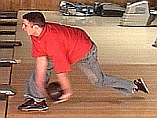
USBCPrecisionBallThrowerHarry_small.jpg One of the most important members of the USBC Specifications and Certification team is not a human being. He's a robot, and his name is "Harry." Harry (named in honor of former testing facility employee Harry Lawrence) is an approximately seven-foot tall robotic bowling ball thrower who is an integral part of the equipment testing and research effort at the USBC Specifications and Certification test facility in Greendale, Wis.

USBC Equipment Specifications and Certification

01/12/08

USBC proactive in facility, equipment standards group

Ridenour's membership in ASTM helps bowling grow in sports science field

USBCPaulRidenour_small.jpg As bowling's national governing body, the United States Bowling Congress must stay current on all sports trends such as facilities and equipment standards. One way it does that is through membership in the American Society of Testing and Measurement (ASTM). It has volunteers from private businesses, sports organizations, universities and governmental agencies. "ASTM members are safety experts," said USBC Research Engineer Paul Ridenour, an ASTM member since joining USBC in December 2006.

USBC Equipment Specifications and Certification

01/08/08

USBC sets specification for Lane Conditioners

Federal safety guidelines must be met to be considered for approval

USBCLogoRed_small.jpg The United States Bowling Congress will now require that all lane conditioners meet federal safety guidelines before they can be considered for approval and use in USBC-certified competitions. The new USBC specification requires that manufacturers of lane conditioners confirm with USBC that their products meet the U.S. Food and Drug Administration "Generally Recognized as Safe" (GRAS) standards under the Code of Federal Regulations.

USBC Equipment Specifications and Certification

12/18/07

Research complete on USBC Bowling Ball Motion Study

Results expected to be made public next spring

USBCLogoRed_small.jpg The United States Bowling Congress has completed its pioneering two-year study of bowling ball motion and how advanced, high-tech equipment may influence lane conditions and scoring in the sport. The USBC Bowling Ball Specifications Task Force - formed in 2005 and comprised of USBC research engineers and technical volunteers from several bowling ball manufacturing companies - is now analyzing the research data results. 

USBC Equipment Specifications and Certification

11/22/07

USBC sets specification for lane oil viscosity

Cooperative role of new task force evident in requirement

USBCLogoRed_small.jpg The United States Bowling Congress has implemented a new specification for the viscosity of lane conditioners. The new specification requires that lane conditioners - commonly referred to as lane oil - used during USBC competition read between 12 and 81 centipoises (the standard unit of measurement for fluids) at 70 degrees Fahrenheit. The specification, recently approved by the USBC Equipment Specifications and Certification Committee, goes into effect immediately.

USBC Equipment Specifications and Certification

10/02/07

USBC forming Lane Conditioner/Cleaner Task Force

First meeting scheduled for Jan. 21, 2008 in South Carolina

USBCLogoRed_small.jpg Continuing to foster cooperative working relationships regarding research initiatives, the United States Bowling Congress is creating a task force with manufacturers of lane conditioners and lane cleaners. The USBC and Manufacturer Lane Conditioner/Cleaner Task Force will include USBC research technicians and representatives from companies that produce bowling lane conditioners and cleaners. The group's first meeting is scheduled for 8:30 a.m. on Monday, Jan. 21, 2008 in Myrtle Beach, S.C.

USBC News

09/22/07

USBC Task Force to study bowling lane surface issues

First meeting scheduled for Nov. 17 in Greendale, Wis.

USBCLogoRed_small.jpg The United States Bowling Congress is forming a cooperative task force with companies that make bowling lanes to comprehensively analyze how issues relating to the sport's playing surface affect scoring and credibility. The USBC and Manufacturer Lane Surface Task Force will consist of USBC research technicians along with representatives from synthetic bowling lane manufacturers. The group's first meeting is scheduled for Saturday, Nov. 17 at USBC Headquarters in Greendale, Wis.

USBC Equipment Specifications and Certification

08/30/07

A statistical approach to lane center certification

USBCLogoRed_small.jpg As earlier reported the USBC has changed its requirements for lane dressing inspections to lessen the workload of local associations. However, the current spec says that every lane in each center must pass specifications set forth by USBC for the center to become certified. Bowlingdigital has asked the USBC Equipment Specifications Department, if with the recent adjustment in lane dressing inspection requirements, USBC has also considered looking at reducing the number of lanes that has to be inspected for a center to become certified for competition.

USBC Equipment Specifications and Certification

08/22/07

USBC research uncovers new facts about bowling ball movement

2006USBCNeilStremmel.jpg As part of its overall study of bowling ball motion, the United States Bowling Congress has uncovered key technical findings about how modern bowling balls act on a lane. Ultimately, these types of studies can help bowlers select bowling balls that best suit their games. "As USBC learns and understands more about the motion of modern bowling balls through this type of breakthrough research, it helps connect science and the sport of bowling," said USBC Technical Director Neil Stremmel.

USBC Equipment Specifications and Certification

08/06/07

Marketing vs. Physics: The truth about axis migration and core dynamics

By Nick Siefers, USBC Research Engineer

USBCLogoRed_small.jpg Many theories about why and how a bowling ball rolls down a lane have been discussion topics within the bowling industry in recent years, including at the United States Bowling Congress, where a ball motion study is a major research focus. With key trends appearing in the data, the significant factors that affect bowling ball motion are becoming scientifically apparent. A separate study relating to how and why the ball rolls the way it does has been conducted. In the following discussion, an attempt will be made to explain the physics that govern bowling ball motion relating to core dynamics.

USBC Equipment Specifications and Certification

08/01/07

Center of Gravity placement on a symmetrical bowling ball: How critical is it?

By Paul Ridenour, USBC research engineer

USBCLogoRed_small.jpg A hot topic on Internet forums recently has been the effect of center of gravity placement in symmetrical bowling balls. The two main pieces of evidence for this study are videos by Brunswick regional PBA staffer Nick Smith and Lane #1 president Richie Sposato. Those videos are effective visual evidence. For a more in depth look, the USBC research staff decided to use robotic ball thrower Harry to roll the balls. This article will discuss the theory behind center of gravity effect on ball motion and will give preliminary conclusions observed from C.A.T.S. data.

USBC Equipment Specifications and Certification

07/14/07

USBC modifies lane dressing inspection requirements

USBCLogoRed_small.jpg The United States Bowling Congress has changed its requirements for lane dressing inspections. Effective Aug. 1, USBC local associations will be required to perform a minimum of one lane dressing inspection per season at each bowling center in their jurisdictions holding USBC-certified competition. Additional inspections will be performed at the discretion of local association officials or the national office.

USBC Equipment Specifications and Certification

06/25/07

USBC presents update on Bowling Ball Motion Research

USBCLogoRed_small.jpg The United States Bowling Congress today disclosed developments of the ongoing technical study of modern bowling balls involving the USBC research team and major bowling ball manufacturers. USBC Technical Director Neil Stremmel, along with three USBC research engineers and technicians, presented the report to a sizeable group of bowling ball manufacturers, USBC coaches, pro shop operators and other bowling industry officials at Mandalay Bay Resort.

USBC Equipment Specifications and Certification

06/05/07

USBC adopts Lane Hardness Specification

USBCLogoRed_small.jpg The United States Bowling Congress has added a new specification relating to the hardness of a synthetic lane surface. All new synthetic surfaces submitted to USBC for testing and approval must meet a minimum Sward Hardness reading of 35. Approval of the synthetic lane hardness specification comes on the heels of USBC's June 1 implementation of a new testing method and specification for the outer materials of bowling pins.

Lesson 3

05/23/07

Bowling ball performance and resulting ball life By Nick Siefers, USBC research engineer

Courtesy of USBC Equipment Specification and Certification


My previous two articles explored the core properties and relationship between the core and cover stock (or shell) of a bowling ball. Taking this a step further, some may ask about the overall ball performance of the selected core and cover as it relates to the "ball life." In this article, we will derive bowling ball performance from a microscopic and macroscopic analysis, which will lead into the discussion of the resulting ball life and different techniques to ultimately prolong the life of a bowling ball.

USBC Equipment Specifications and Certification

05/22/07

Two-handed delivery requires new look at USBC rules

By Jeff Henry, USBC Rules Department

2007PAGCassidySchaub_small.jpg The emergence and growing popularity of what is known as the "two-handed" delivery in bowling has caused the USBC to consider its impact on the rules and application of the sport's specifications. How does this style affect USBC rules related to a legal delivery? Do players violate the rules if they switch styles and throw at spares or their first deliveries in the more traditional one-handed approach? And does the style affect the application of specifications related to balance of the bowling ball and/or the allowance and use of the gripping holes?

USBC Specs

05/03/07

High Tech Device helps USBC advance Pin Testing

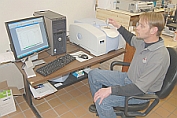
USBCSpecsBobRoloffFTIS_small.jpg Beginning June 1, USBC will use a high-tech device to test the outer materials of bowling pins. USBC research engineers will use an optical instrument with a computer interface - called a Fourier Transform Infrared Spectrometer - to measure and identify the chemical structure of wood and synthetic bowling pin sample materials sent annually to USBC by various bowling pin manufacturers.

Lesson 2

04/23/07

Understanding the relationship between core and cover stock By Nick Siefers, USBC Research Engineer

Courtesy of USBC Equipment Specification and Certification

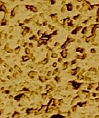
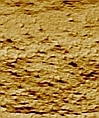
ReactiveUrethane_small.jpg Urethane_small.jpg The previous article entitled "Core Properties" described and explained a bowling ball's core dynamics as it relates to ball reaction and performance. In this article, the other half of ball reaction will be broken down and investigated. In the end, a bowler should understand the relationship between the core and cover stock.

Lesson 1

04/23/07

Core Properties By Nick Siefers, USBC Research Engineer

Originally published March 14, 2007

The radius of gyration is defined as the square root of the moment of inertia divided by mass of the object. You don't have a clue what this has to do with bowling? Welcome to the club! If you would like to learn what friction, rotation, mass properties, flare potential, etc. exactly means, or just want to enhance your knowledge, you are on the right website! USBC Technical Director, Neil Stremmel, has agreed to provide a series of articles to bring some light into the global darkness and to help explain basic definitions and terminology or to translate the physics definitions. In the first article, Nick Siefers, USBC Research Engineer, explains the "Core Properties".

USBC Specs

04/18/07

Calling all inventors: USBC seeks device measuring friction on bowling lanes

USBCLogoRed_small.jpg In an exclusive opportunity, the United States Bowling Congress is offering the chance to influence the future of bowling through a new technology contest. USBC will award a $5,000 first-place prize to the individual or team submitting the best design for a device that can measure the amount of friction on a bowling lane. Second prize is $2,000.

Syndicate content